If you're looking up natural remedies to stop drinking, it's probably because you want to do this gently, at home, without jumping straight to rehab or a prescription. That's a reasonable way to start. The trouble is that the internet is full of "10 herbs that cure alcohol cravings" lists that promise a lot and skip the important parts. So here's the honest sort: what has some real evidence behind it, what works mostly as a comforting ritual, and what no herbal tea will ever replace.
Can a natural remedy really help you stop drinking?
No herb will stop drinking for you, and none of them cures alcohol dependence. What some natural remedies can do is support you along the way: take the edge off anxiety, soften a craving a little, help you fall asleep. Meanwhile you're doing the actual work, which is changing habits, riding out urges and getting through one day after another.
It's worth being clear about this from the start, because disappointment is one of the things that pulls people back to drinking. If you expect a supplement to do the heavy lifting and it doesn't, it's easy to decide that nothing works. Treat a natural remedy as a nudge, not a cure, and it can have a place in your plan. Treat it as the whole plan and it will let you down.
Kudzu: the one herb with serious evidence behind it
If you learn about one plant, make it kudzu (Pueraria lobata). It's a climbing vine from East Asia whose root has been used in traditional Chinese medicine for centuries, and it's the only herbal remedy for drinking that has been through proper clinical trials. Small early studies found that heavy drinkers given a standardized kudzu extract tended to drink less in the days afterwards.
The newest evidence is the strongest so far. In November 2026, researchers at UC San Francisco published a trial in the American Journal of Psychiatry. It involved 120 adults with alcohol use disorder who binge drank at least once a week. People who took kudzu before situations where they expected to drink heavily went from about 2.15 binge-drinking days a week to 1.42. In the placebo group, the figure barely moved (2.15 to 2.06). The benefit was still visible three months after the treatment ended, and no serious side effects were linked to kudzu.
The limits matter just as much. Those results come from cutting back, not quitting. The trial used a standardized formulation, and the researchers warn that over-the-counter kudzu supplements can vary a lot, so you shouldn't expect the same effect from whatever is on the store shelf. Memorial Sloan Kettering's integrative medicine service also notes that earlier studies were small and that a systematic review found no clear benefit. Kudzu isn't an approved treatment for alcohol withdrawal, and it doesn't replace medical care if you drink heavily.
If you want to try it, talk to a pharmacist or your doctor first, especially if you take other medication. Kudzu may boost the effect of diabetes drugs, and its estrogen-like compounds make it a poor fit for some hormone-sensitive conditions. Checking first is the sensible step, not a box-ticking exercise. You won't find a dose here, because that's a professional's call. If you'd like to know what proven, prescribed options exist, our guide to medication to stop drinking covers them.
Calming herbs for anxiety and sleep
A lot of people drink partly to unwind or to get to sleep. When you stop, that tension comes back, and it's often the moment a craving hits hardest. A few herbs with a calming reputation can make those hours a little softer:
- Valerian and passionflower, traditionally used for mild anxiety and sleep.
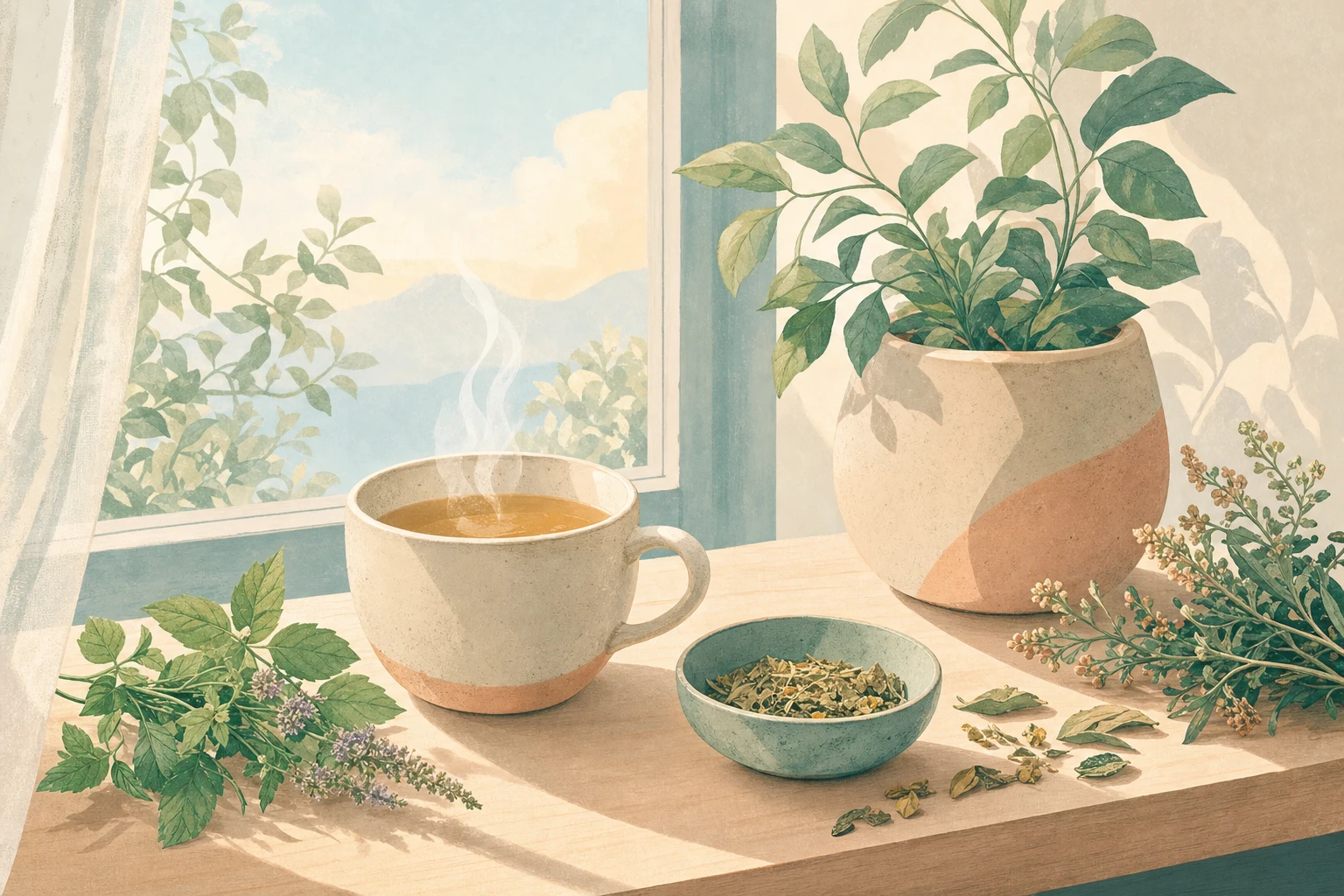
- Chamomile or lemon balm tea in the evening, as an end-of-day ritual.
Don't overestimate them. The US National Center for Complementary and Integrative Health describes the evidence for valerian and sleep as inconsistent, and says there isn't enough data to draw conclusions about anxiety. It also warns against combining valerian with alcohol or sedatives. These are gentle supports, not strong sedatives.
There's still something to them. Making a hot mug of tea at the time you'd normally pour a drink swaps one habit for another, and that ritual often matters as much as the plant in the cup. If sleep is a real struggle right now, why alcohol wrecks your sleep explains what's going on and when it gets better.
The folklore remedies: ginger, apple cider vinegar, grapes and milk thistle
The lists going around online also include ginger (supposed to change how alcohol tastes), apple cider vinegar (supposed to "balance blood sugar" and kill the urge), grapes or sweets to "satisfy" a sugar craving, and milk thistle, usually sold as liver support. To be clear, there's no solid scientific evidence that any of these helps people stop drinking.
That doesn't make them useless. The plant isn't doing the work. Doing something instead of white-knuckling is, and that part really does help.
What helps most, day to day
The natural remedies that work best are usually the plainest ones, and they don't come in capsules:
- Drink plenty of water: staying hydrated helps you get through the first days and eases some of the discomfort.
- Eat properly: regular meals help you avoid the blood-sugar dips that can set off a craving.
- Keep your hands and body busy: a walk, a shower, a phone call, especially at the time of day you used to drink.
- Get the alcohol out of the house: it's the most boring tip on the list and one of the most effective.
For the moments when an urge hits hard, we've gathered practical tools in 5 things to do the moment a craving hits. If you want a full plan from the beginning, how to stop drinking alcohol (and actually make it stick) walks through it step by step.
Counting your days helps more than people expect, too. Watching the number go up turns a vague effort into progress you can see. If it helps, Sober Days counts your days and the money you save, quietly, on your phone. There's no account and no ads, and it's free.
FAQ: natural remedies for quitting alcohol
Which herb actually helps you stop drinking? Only one stands out on the evidence: kudzu, and even then the research is about drinking less, not stopping completely. The other herbs you'll often see mentioned, like valerian, passionflower, chamomile and lemon balm, don't make you quit. They act on anxiety and sleep, which are two of the main reasons many people drink in the evening. That support is real but indirect. Anything sold as "the herb that makes you quit" is marketing, not science.
Does kudzu work, and how long does it take? The trials suggest it can lower how much people drink, and in the 2026 UCSF study, people took it ahead of situations where they expected to drink heavily. Personal accounts often mention a few weeks before noticing anything, but stories aren't evidence. Store-bought products also vary in what they actually contain. Because kudzu can interact with some common medications, including diabetes drugs, asking your pharmacist or doctor first is a must, not just a nice idea. No dose is given here.
Is there something that can make a person stop drinking without them knowing? No, and this needs saying plainly. Giving someone a substance without their knowledge is dangerous. Some products that create an aversion to alcohol cause violent and sometimes serious reactions if the person drinks anyway. It's also illegal, even with the best intentions. If you're worried about someone you love, what works is honest conversation and care, not a hidden product. How to help someone stop drinking without pushing them away and when your partner drinks too much cover approaches that actually help.
Can a natural remedy replace medical detox? No, never. This is where things get serious. If you've been drinking heavily every day for a long time, stopping suddenly can cause seizures or delirium tremens, and both are medical emergencies. No herbal tea does anything to prevent that. In that situation, your first step is to see a doctor. Alcohol withdrawal symptoms: what's normal, and what's not can help you work out where you stand.
What can I drink instead of alcohol in the evening? This often helps more than any herb, because it replaces the whole habit and not just the substance. Something bitter and fizzy in your usual glass covers most of it: the ritual, the taste, the time of day. It needs to taste good, or you won't keep it up. What to do instead of drinking in the evening has practical ideas for the 6 to 9 p.m. stretch, which is often the hardest part of the day.
What no natural remedy replaces: seeing a doctor
This is the part the herb lists leave out, and it's the most important one. If you drink heavily, every day, and have for a long time, don't stop all at once on your own and count on an herbal tea to get you through. The NHS warns that stopping suddenly can be very dangerous if you're dependent on alcohol. Withdrawal symptoms usually begin 6 to 12 hours after the last drink. In severe cases they can include heavy shaking, confusion, seizures and delirium tremens, which is life-threatening. No natural remedy protects you from that.
Get medical help right away if you notice any of these signs while cutting down or stopping: severe tremors, hallucinations, confusion or disorientation, fever and heavy sweating, a racing heart, or extreme agitation. These are emergency signs. Call 911 in the US, 999 in the UK, or your local emergency number. A supervised detox, sometimes with medication, is safer and more comfortable than quitting cold turkey, and if you're thinking about going slowly, how to taper off alcohol safely explains why that also works best with a doctor involved. Asking for help isn't failing. It's the smart choice. In the US, the SAMHSA National Helpline (1-800-662-4357) is free and confidential. In the UK, your GP or the NHS service finder can connect you with local alcohol support.
A natural remedy can still be part of how you do this, as long as you keep it in proportion: a gentle ritual, a small help with cravings, something comforting at the end of the day. What keeps you going is the pile of small choices you make, one day at a time. Kudzu or chamomile can be part of that, without carrying all the weight.
This article is for information only and isn't a substitute for advice from a healthcare professional.
Sources
- EurekAlert! / UC San Francisco — Kudzu helps people cut back on binge drinking (American Journal of Psychiatry, Nov. 2026)
- Memorial Sloan Kettering Cancer Center — Kudzu: uses, interactions and side effects
- NCCIH — Valerian: usefulness and safety
- NHS — Alcohol-use disorder: treatment and withdrawal
- NIAAA — Understanding alcohol use disorder
- SAMHSA — National Helpline