If you've searched "what to do instead of drinking," you've probably already found the lists — mocktail recipes, 31 hobbies, a bubble bath. None of that helps at 7pm on a Tuesday when you're tired and the evening feels like it's missing something. The window that actually decides whether a plan holds is roughly 6pm to 9pm, and that's what this article is about.
Why the evening is the hardest part
The urge to drink at night rarely comes out of nowhere. It's triggered by a context: the door closing behind you, the noise of the day finally dropping away, the couch, the specific quiet of a kitchen after work. Your brain learned, over months or years, that this context is followed by a drink, and that the drink is followed by relief. That's a loop — trigger, routine, reward — and it's simple mechanically even when it doesn't feel simple to live through. The trigger fires automatically; it's the routine in the middle that you can actually change.
This is why willpower alone tends to fail here. You're not fighting a craving that appears at random — you're fighting a routine that's been rehearsed hundreds of times in the exact same setting, at the exact same hour. Understanding that the 6pm craving is a cue-driven habit, not a character flaw, is the first useful thing to know about it.
First, find out what the drink was doing for you
Before you can replace the evening drink, it helps to know what job it was actually doing, because "what to do instead of drinking alcohol" has a different answer depending on the function. For most people it's one or more of four things: marking the transition from work mode to home mode, taking the edge off tension or stress, filling a stretch of boredom, or rewarding yourself for getting through the day. A drink that's marking a transition needs a different replacement than a drink that's numbing stress, and a drink that's filling boredom needs something else again. Trying to swap in the same tea-and-a-walk suggestion for all four is why generic lists don't hold up on a hard night — they're solving the wrong problem for whoever's reading them.
Take a moment, honestly, to notice which of the four feels closest to true for you most evenings. You don't need a perfect answer. Even a rough guess changes what you try next, because it points you toward ways to wind down without alcohol that actually match your evening instead of a stranger's.
The first 20 minutes when you get home
The most decisive stretch of the whole evening is usually the first twenty minutes after you walk in, because that's when the old routine is most automatic and least examined. This is where a deliberate transition ritual earns its keep — something physical enough to occupy your hands and clear enough to mark "the day is over" without a drink doing that job for you.
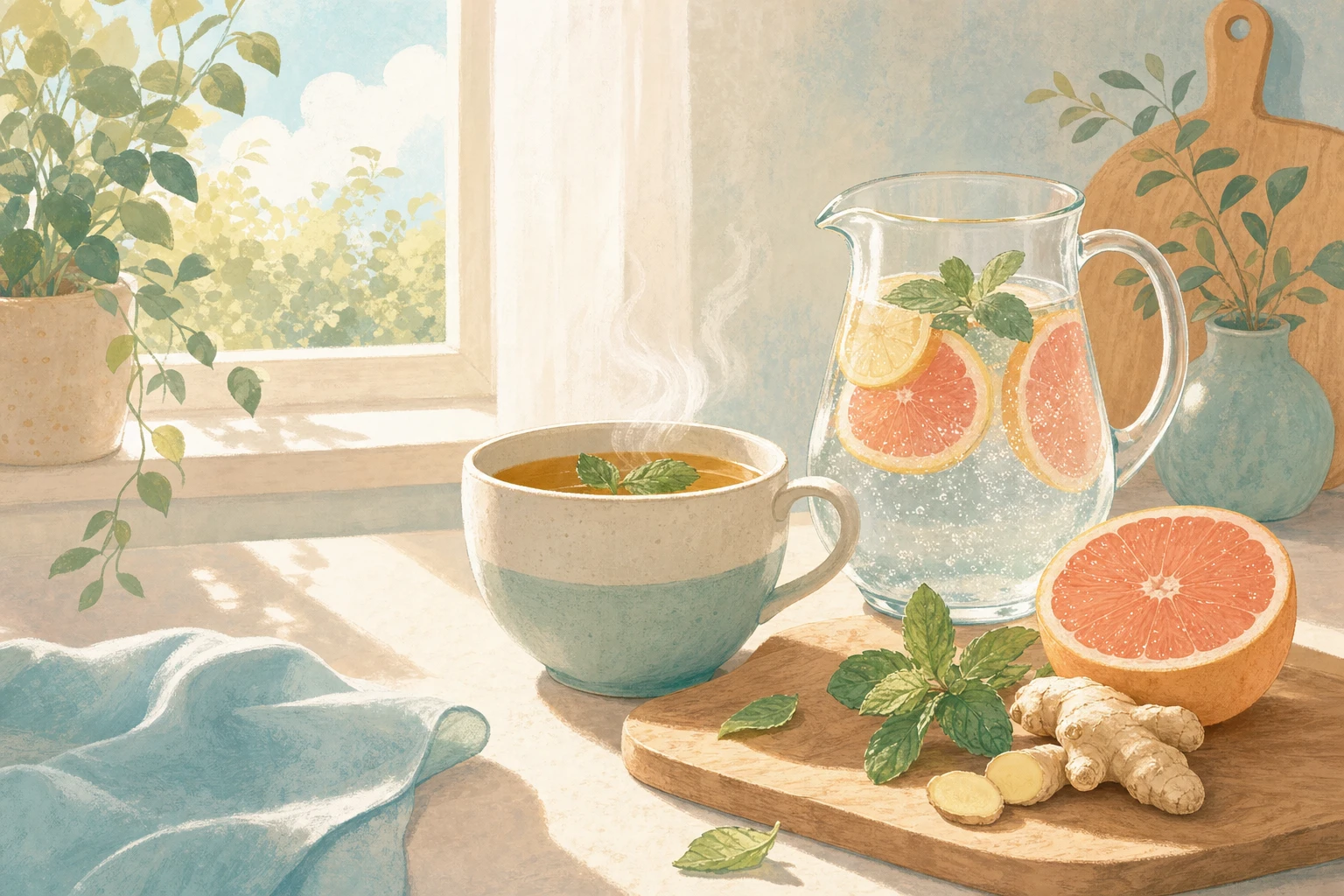
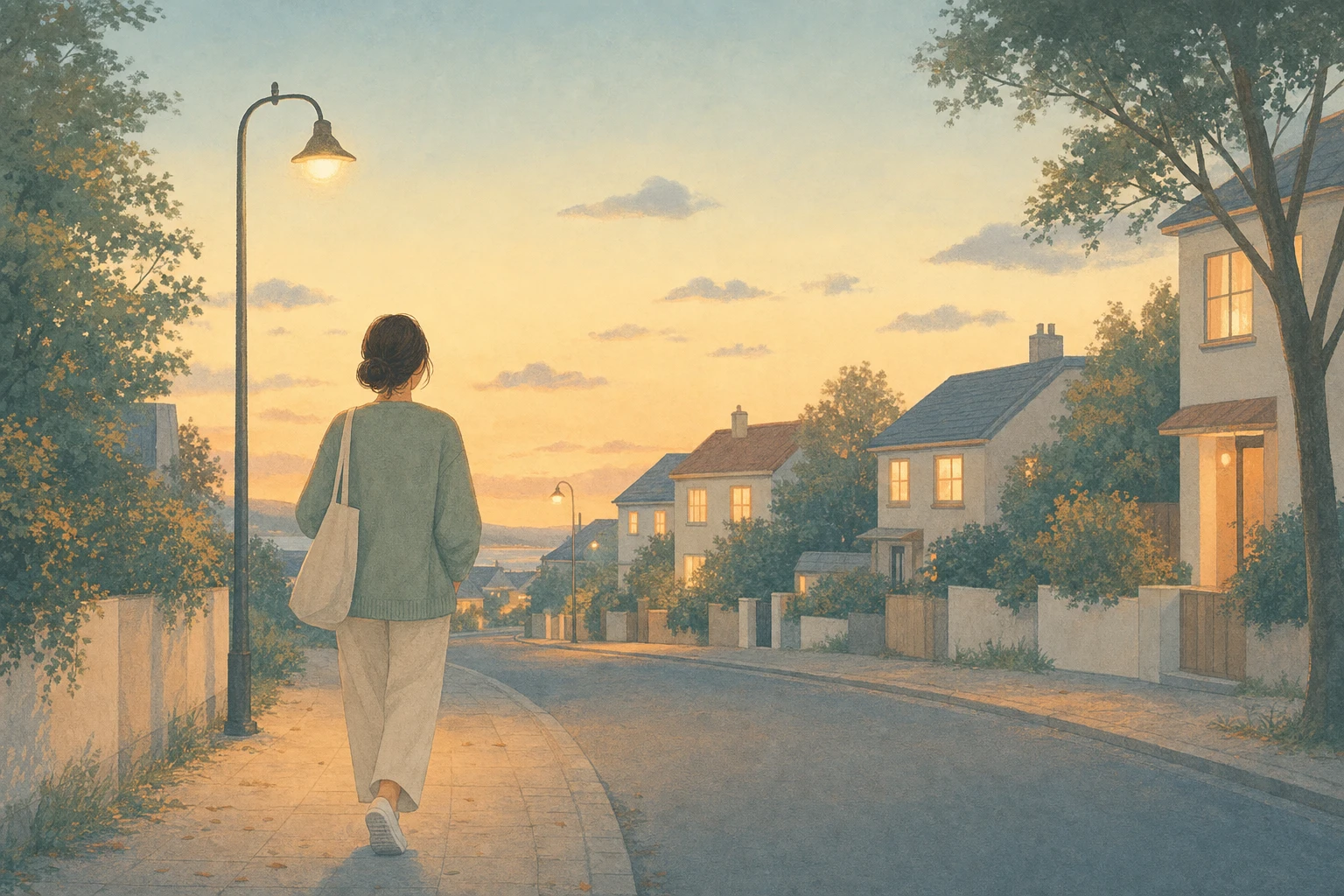
Changing out of your work clothes, a short shower, a ten-minute walk around the block before you even go inside, music you only play at this hour, a non-alcoholic drink poured into an actual glass instead of straight from a can — any of these can work, and the specific choice matters less than the fact that it happens at the same time, every time, so it becomes the new automatic thing. The goal isn't to distract yourself from wanting a drink. It's to give the transition somewhere else to go.
What to do instead, depending on why you drink
If the drink was mostly about marking the transition from work to home, the fix is rarely a substitute drink — it's a substitute ritual that hits the same "off switch" feeling. That might be changing clothes the moment you're through the door, a short walk before you even open the fridge, or five minutes sitting outside with no phone. The point is a clear, repeatable signal that the workday has ended, separate from anything you consume.
If it was mostly about stress, the after-work drinking habit is often standing in for something closer to nervous system regulation, and alcohol only ever manages that temporarily before making sleep and next-day anxiety worse. A few minutes of slow breathing, a hot shower, stretching, or even just naming out loud what was hardest about the day tends to do more for the actual tension than a drink ever did — it's slower, but it doesn't have a comedown attached to it.
If it was mostly about boredom, plain boredom drinking, the evening probably has a shapeless stretch of time with nothing pulling your attention, and a drink was filling that shape. Here, having something specific queued up before the craving hits — a show you're actually into, a call you make a habit of, a project with a clear next step — matters more than the activity itself, because decision fatigue at 8pm is real and "I'll figure something out" usually loses to the couch and the fridge.
And if it was mostly a reward, something you'd earned after a long day, the honest fix is finding another way to mark "I got through it" that doesn't come with a hangover. That could be genuinely small — a specific snack, ten minutes of a game, texting a friend — but it needs to feel like it counts, or it won't stick. For the specific question of what to actually drink instead in the moment, the best non-alcoholic drinks covers that ground properly; this article is about the routine around the glass, not what's in it.
Why the first two weeks feel empty (and what changes after)
Here's the honest part: for the first week or two, none of this will feel like it's fully working, and that's normal rather than a sign you're doing it wrong. The evening can feel long, restless, even a little flat — you've removed something that reliably did a job, and the replacement hasn't had time to earn the same trust yet. That restlessness is your brain recalibrating a routine it ran on autopilot for a long time, and it does settle.
What's actually happening underneath is that your evenings are getting longer — not literally, but in the sense that you're present for more of them, which can initially feel like too much time rather than a gift. Given a bit more time, that changes. Many people also notice their sleep improving once the alcohol is out of the evening equation, which in turn makes the whole loop easier the next day. If you want the detail on why that connection is so strong, what alcohol does to your sleep is worth reading. A new evening routine and an easier evening don't arrive at the same time — the routine comes first, and the ease follows it, not the other way around.
If a craving hits hard in the middle of any of this, what to do when a craving hits has specific, in-the-moment tools for getting through those fifteen or twenty minutes. And if you're not sure yet whether you're aiming to cut back or stop entirely, how to cut back on drinking and the real benefits of not drinking can help you figure out which goal actually fits.
When the evening drink is more than a habit
Everything above assumes you're changing a habit, not managing a dependency, and it's worth being honest about the difference. If you drink heavily every day or nearly every day, and have for a long time, don't stop suddenly and alone. Your body can adapt to constant alcohol, and pulling it away too fast can trigger genuinely dangerous withdrawal. Watch for severe tremors, hallucinations, confusion or disorientation, fever or heavy sweating, seizures, a racing heart, or extreme agitation — any of these is a medical emergency, and it means calling emergency services or getting to an ER, not toughing it out. If that's closer to your situation, talk to a doctor first about how to bring your drinking down safely; a supervised plan is often the safer route than a hard stop on your own.
This article is informational and doesn't replace medical advice. If you're in the US, SAMHSA's National Helpline (1-800-662-HELP) is free and confidential, around the clock. In the UK, NHS alcohol support is a good starting point, and wherever you are, your own doctor is usually the fastest way in.
None of this has to be perfect from the first night. Some evenings the new routine will click, and some it won't, and both are part of actually rebuilding the hour that used to belong to a drink. If it helps, Sober Days counts your days quietly, on your phone — no account, no ads — in case having something track the ones that go well takes one thing off your plate. And if you want a simple way to see that progress add up, counting your sober days is worth a read.
Sources