
The party invite lands and your stomach drops before you've even decided whether to go. That dread is one of the most predictable parts of early sobriety, and almost nobody warns you about it directly. Learning how to socialize without alcohol isn't really about finding the perfect mocktail order — it's about knowing which moments in an evening are actually hard, so you're not blindsided by them, and giving yourself permission to leave when you've had enough.
The dread beforehand is worse than the event itself
If you've spent the whole afternoon rehearsing conversations, imagining people staring at your empty hand, or half-convincing yourself to cancel, you're not overreacting — you're anticipating. Anticipation dread is its own separate thing from the actual experience, and it tends to peak hours before anything has even happened. Most people who push through it report the same pattern afterward: the first twenty minutes were awkward, and then it was just a party, the way it always was. That doesn't mean the anxiety isn't real in the moment. It means it's worth noticing that your brain is predicting a worse night than the one you're likely to have.
Part of why alcohol feels like it used to help here isn't imaginary. Alcohol temporarily quiets the brain regions that respond to threat, which is exactly why a drink can make a room full of people feel more bearable for an hour or two. The catch is that as it wears off, the anxiety it dulled often comes back, sometimes worse than before you started. Knowing that mechanism doesn't make the party easier by itself, but it can help you stop treating your nerves as proof that you're doing something wrong. You're not missing a skill everyone else has. You're just going into the room without the thing that used to mute the volume.
The three moments that actually get hard
Most sober nights are not uniformly difficult. They have a shape, and if you know it in advance, each part gets smaller. The first hard moment is arrival — walking in, scanning the room, deciding what to hold and where to stand. Having a drink in hand within the first sixty seconds solves a surprising amount of this; it gives your hands something to do and answers the "what are you having" question before anyone asks it.
The second hard moment is the second offer, or the person who notices and asks about it directly. The first "no thanks" is easy for most people. It's the refill round twenty minutes later, or the friend who says "wait, you're not drinking tonight?" in front of a small group, that catches people off guard. Having a line ready — not improvised on the spot — makes this moment almost boring instead of loaded.
The third hard moment tends to arrive around the two-hour mark, often close to 9pm at a typical dinner or party. This is when everyone else's mood is visibly lifting, the room gets louder, and you notice you're still exactly where you started emotionally. That gap can feel isolating, even lonely, in a room full of people you like. It passes, and knowing it's coming — that it's a known dip, not a sign the night is going wrong — makes it far easier to sit with for the twenty or thirty minutes it usually lasts.
What to actually say
Vague deflection ("oh, I'm good for now") works for some people, but a lot of people find it easier to have two or three specific lines ready, so nothing needs to be invented under pressure:
- "I'm driving tonight, so I'm on soda water." (If you are, use it — nobody argues with a driver.)
- "I'm taking a break from drinking right now — I'm good with this." (Direct, calm, doesn't invite a follow-up if said without hesitation.)
- "Not tonight, but I'll have whatever's non-alcoholic you've got." (Keeps you in the ritual of ordering something, without the explanation.)
- "I feel better without it lately, so I'm skipping it." (Honest, hard to argue with, doesn't require justifying anything further.)
The tone matters more than the words. Said flatly and without an apology in your voice, almost any of these ends the conversation in five seconds. Said hesitantly, with a trailing "...I think," it can read as an opening for someone to push. You don't owe anyone your full reasoning, and a genuinely close friend who asks with real curiosity later, one-on-one, deserves more than a stranger asking twice in front of a group.
What to drink instead
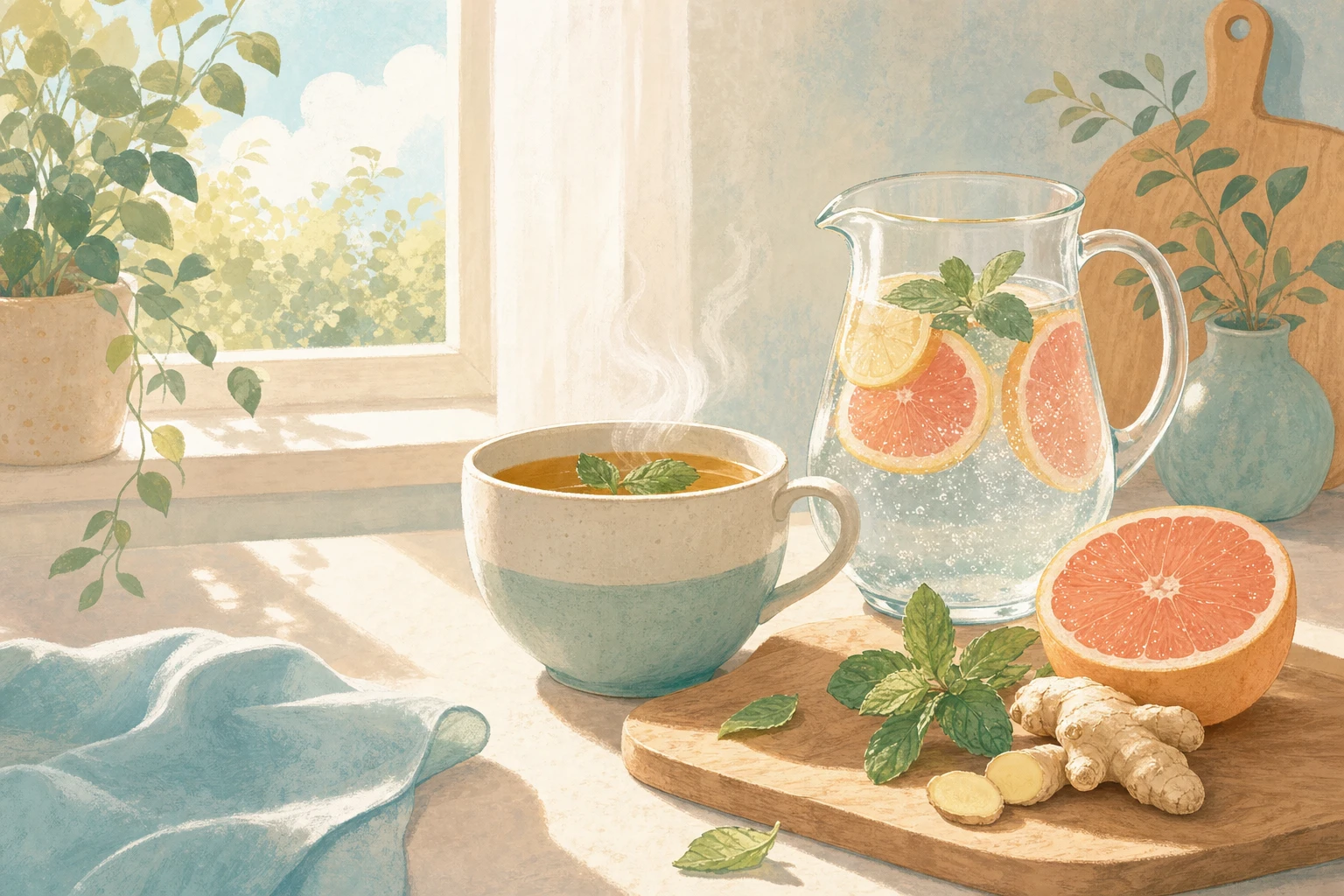
Holding something matters more than what's actually in the glass. Soda water with lime looks like a real drink from across a room and removes the "what are you having" question entirely. Ordering a proper non-alcoholic option when the venue has one — a good mocktail, an alcohol-free beer — can make you feel less like you're improvising and more like you made an actual choice, which you did. If you're hosting or going somewhere you can plan ahead, bringing your own alcohol-free option means you're never stuck with whatever's on offer, and it can double as a low-key conversation starter rather than something to hide.
You're allowed to leave
An exit plan is not a backup for failure — it's a strategy, and using it is not giving up. Deciding in advance how you'll leave (your own car, a rideshare app open and ready, a "I've got an early morning" line prepared) means you're not negotiating with yourself at 10:30pm while tired and worn down, which is exactly when willpower is at its thinnest. Some people find it useful to set a soft target before they even arrive — "I'll stay ninety minutes and then I'll see how I feel" — so leaving isn't a dramatic decision made in the moment, just following through on a plan made when you were thinking clearly.
If it helps, Sober Days quietly counts your days and what you've saved, on your phone — no account, no ads — so you've got something concrete to look at on a night when the room feels loud and the reasons feel far away.
Skipping it is a legitimate choice too
In the first few months especially, not every event is worth the effort, and turning one down isn't a failure of commitment. A wedding with an open bar and a room full of people you barely know, three weeks into not drinking, is a genuinely harder environment than a dinner with two close friends who already know what's going on. It's reasonable to be selective about which battles you take on early, the same way you'd pace yourself with anything else that takes real effort. Saying "I'm going to sit this one out" is not the same as saying "I can never do this" — it's often exactly what lets you show up, rested and steady, for the ones that matter more. If cravings do show up around social pressure, here's what to do the moment one hits, and having that plan in your back pocket makes the whole calculation less scary.
None of this gets easier because you gritted your teeth through it once. It gets easier the way most things do — with repetition, until walking into a room without a drink stops being a decision you have to make every single time and just becomes how you show up. Building routines that make staying sober sustainable matters here too, because the parties are only a few nights a month; the rest of your ordinary life is what actually holds the change in place.
When to be careful
Everything above assumes you're choosing not to drink for a night, which is a different situation from stopping after a long period of heavy, daily drinking. If that's you, please don't use a party as the moment to quit outright on your own — heavy daily drinkers can experience dangerous withdrawal symptoms, including seizures, if they stop abruptly without medical support. A doctor can help you do this safely, and asking for that help is not a sign you've failed at anything. This article is general information about the social side of sobriety, not medical advice, and it isn't a substitute for talking to a healthcare professional about your own situation.
The next invite doesn't have to feel like the first one did. Most of what makes it hard is the anticipation and the handful of specific moments in between — and both get smaller once you know exactly what you're walking into.
Sources